ESCAPE FROM THE CZAR is the story of my grandfather, Povilas Glamzo, from his teen years until he was roughly thirty years old. He was a citizen of the Imperial Russian Empire. Povilas was alternately known as Pavel or Paul.
I never met him. His large portrait, painted by well-known New York artist, H.C. Wolcott, hung prominently on our living room wall. A little plaque nailed into the ornate, gold frame was engraved, “Paul Glamzo 1875-1943.”
As a little girl, I would secretly enter the living room at night and turn on the spotlight over his picture. He seemed to come alive. I would stare into his azure eyes, wondering who he really was, what adventures he had, and what secrets he died with. It was almost as if he were right there, encouraging and exhorting me, for what reason I wasn’t sure.

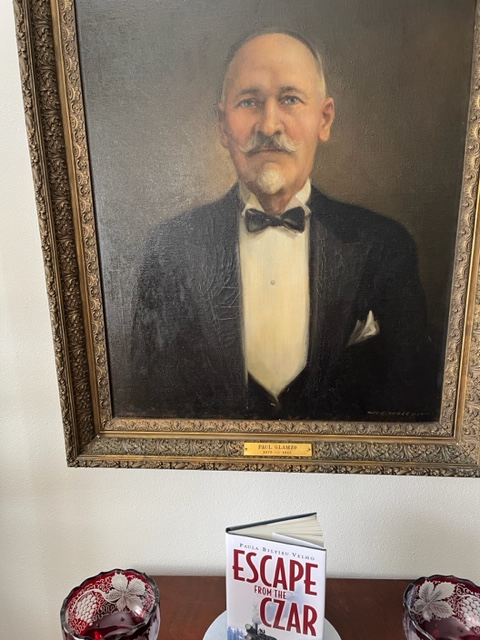
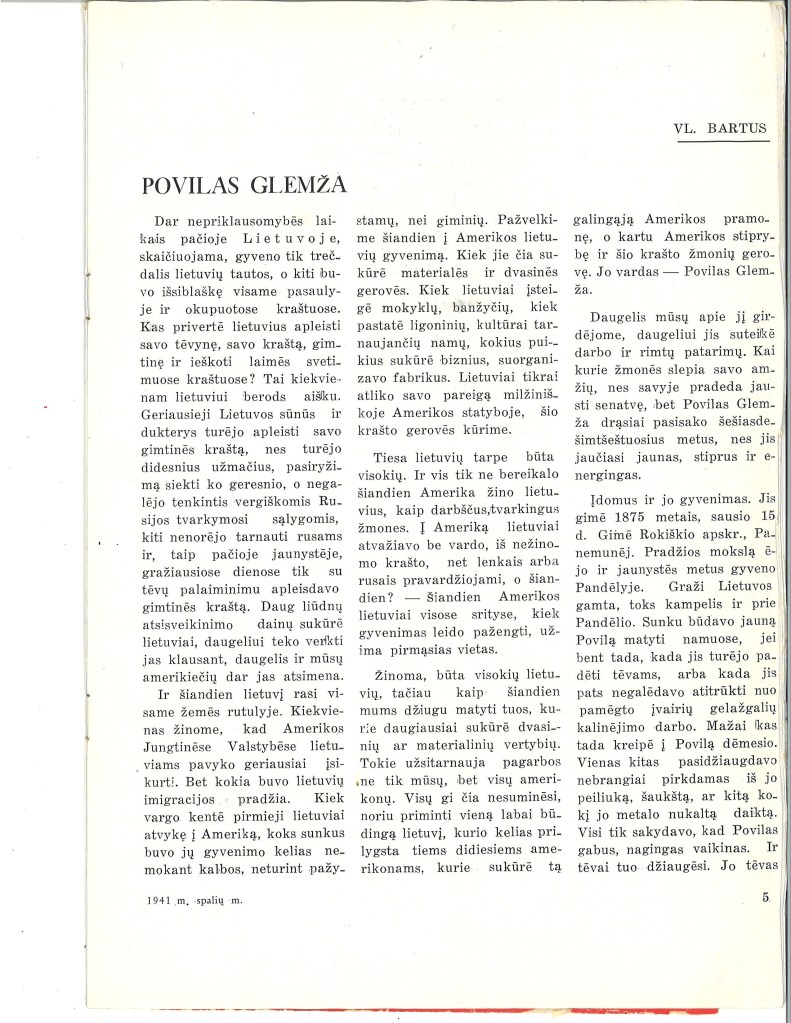
In 2000, I found an old magazine called Lietuva in the back of a drawer under a lot of clutter. Instantly, I recognized my grandfather’s picture on the magazine’s cover. It was the same image from his portrait that I had seen for years. The issue date was December 12, 1941, just a few days after the attack on Pearl Harbor. Now, sixty years was a long time to keep a magazine around, but my mother was great with protecting pictures and mementos. So, without scanners, copiers, or iPhones, I am glad my mother left where it was and for me to find it.
Leafing through the magazine, I found a two-page interview for Povilas Glemza. I guess the spelling of his last name changed over time. It was Glamzo under his portrait. I couldn’t read further because the magazine was entirely in Lithuanian. With my curiosity piqued, I hoped to get it translated and unlock the mysteries of his life.
Working through leads on the internet, I contacted various Eastern Orthodox churches in Brooklyn and found a woman who said she would translate the interview for me. Six months later I had it in English. I read how my grandfather, in his sixties at the time, looked back on a life well-lived, stretching over half of a century. I learned the names of his parents, the town where he grew up, his first job, first salary, and even his feelings on escaping from imperial Russia.
I decided to put that information into a novella. The names and places are real. The conversations are my own creations. Some situations are from my imagination. The history is accurate to the best of my research. Any mistakes in history are mine.
Povilas in Lithuanian translates to Paul in English. Also, the Latvian town of Libau has several recognized spellings, but in this novella, it is referred to as Liepaja.
Povilas Glamzo desired a life of significance and freedom to make the most of his time on earth. He was willing to endure a struggle and escape from the past. Povilas joins with other visionaries and risk takers who follow their dreams.
Additional Photos
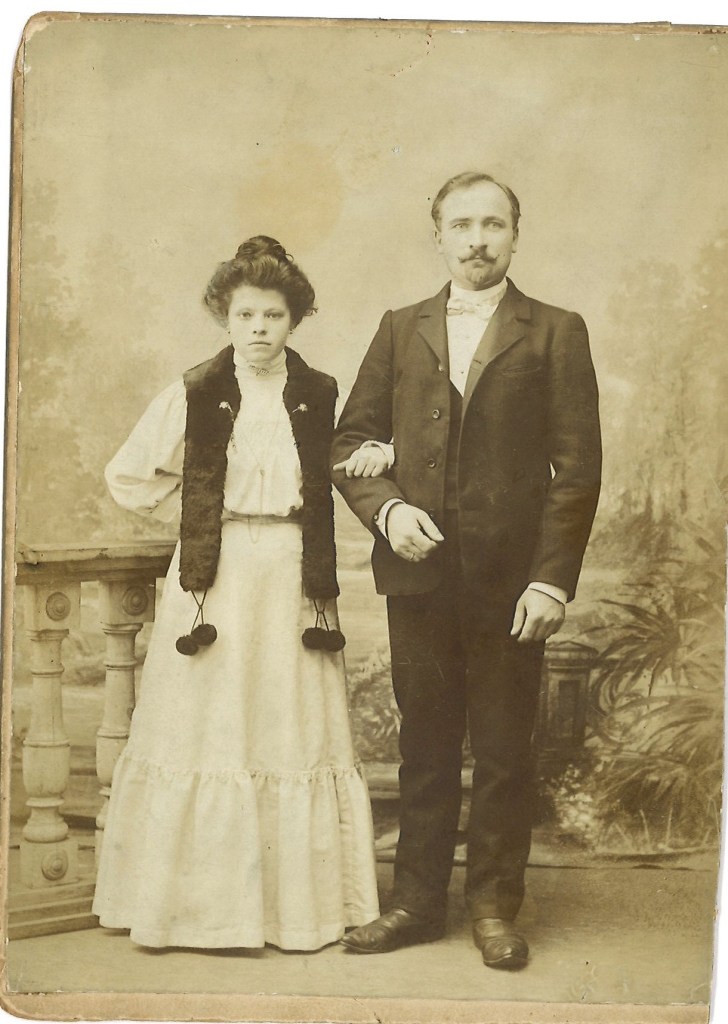
c. 1900
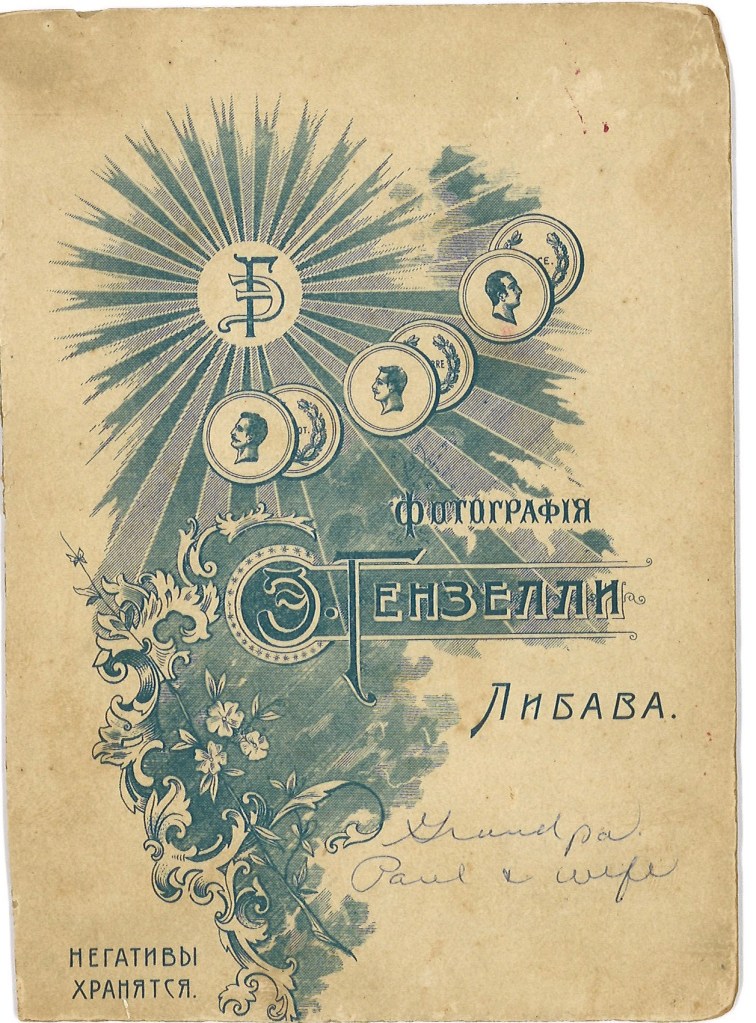
with “Grandpa Paul & Wife” handwritten under the Photographer’s logo
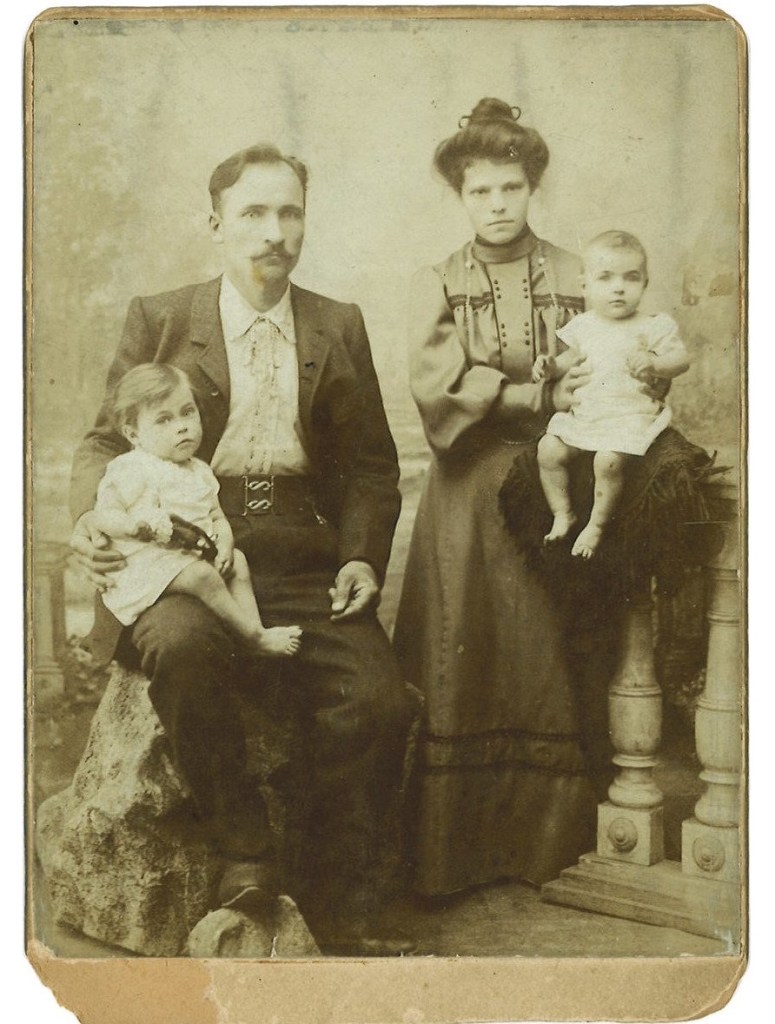
Povilas with Brenislava
and Sophie with Wanda,
c. 1902
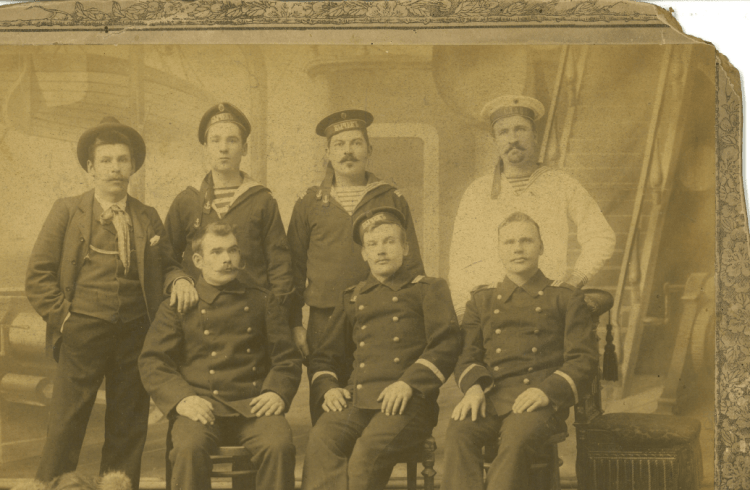

 Paula Velho